August 7, 2026 | Education
Summer Stories: Youth Development Program, Week 6
What a busy week of field trips, farm planning, and harvesting!
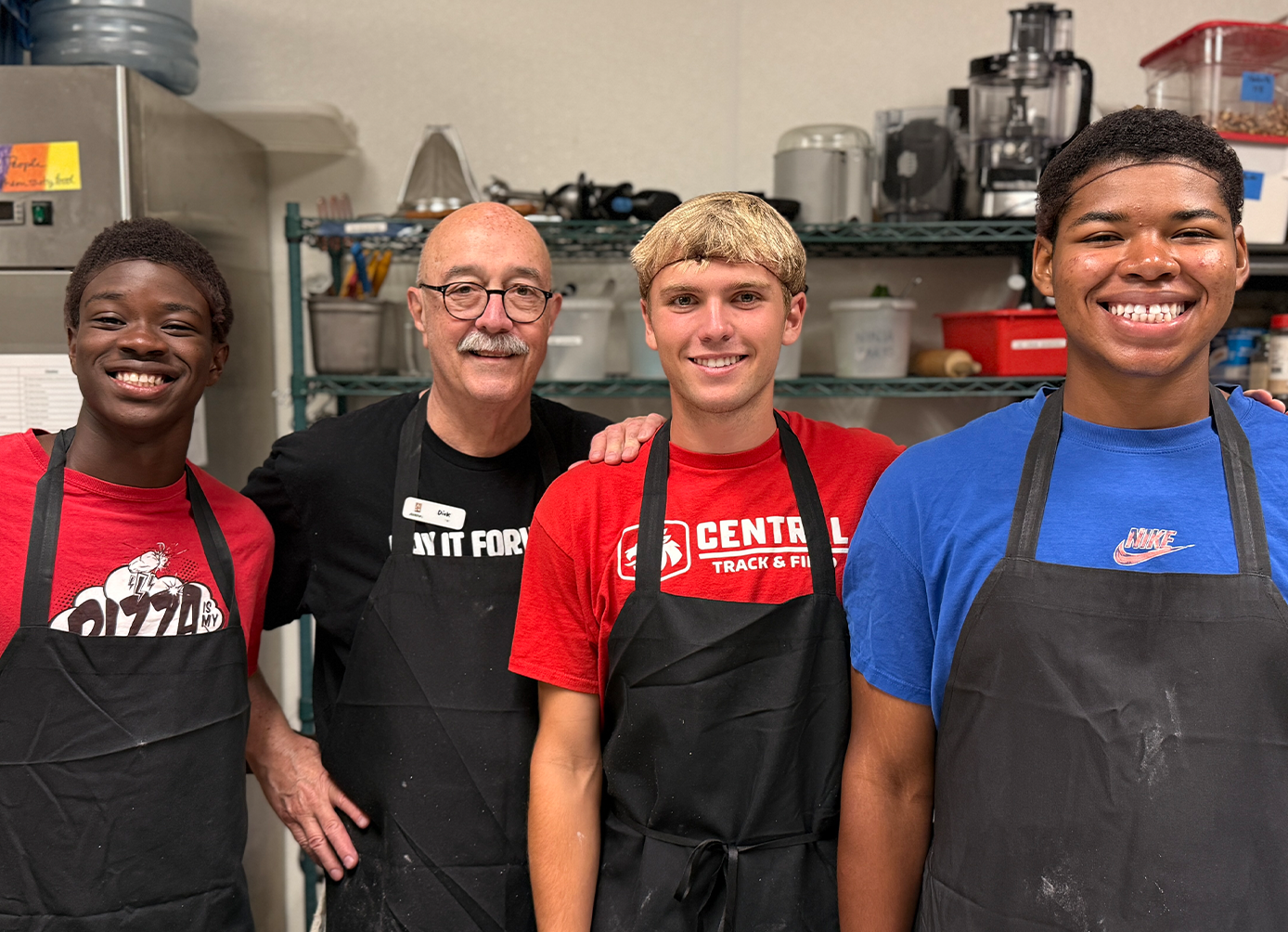
The Youth Development Program is a paid opportunity for high-school-age students to develop and hone various skills in preparation for life beyond the classroom. The summer session is called the Seed Crew, and is 8 weeks of working, learning, and connecting as a team.
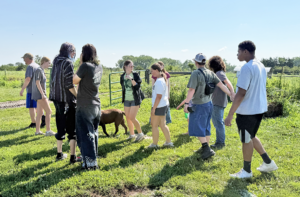 The week started off with one of our favorite field trips of the season to Westfork Farm in West Chester. The crew spent the morning touring their farm. They learned about the challenges and rewards of raising animals on pasture and how they farm regeneratively. They also took some time to harvest green beans and peaches. The highlight for many was getting to pet all the new farm kittens. They ended the morning by treating the high schoolers to watermelon and cookie bars on the patio. As always, it was an educational and fulfilling field trip, and we are so grateful for their hospitality.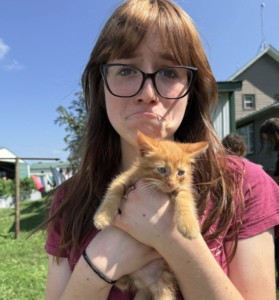
This was a big week for field trips, because Tuesday we headed to Wickiup Hill to do some engaging outdoor leadership and communication activities. The nature center director, Kent, led us through a couple of fun communication exercises. The first involved one team member being blindfolded and guided by the voice of another who couldn’t see them.Their only way to know how to guide them was by following the hand motions of a third team member who could see but couldn’t speak. 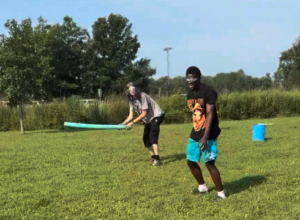 There was a lot of yelling and laughing. After our second activity of working as a team to cross an imaginary river with 4 small blocks, we gave the students time to explore the outside trails. We wrapped the day with lunch and some farm work.
On Wednesday, we made up for lost time by engaging in essential harvesting for the CSA pickup, as well as weeding and planting projects. One crew also went to Groundswell to support Cafe operations. After lunch we did a farm simulator workshop that had the students partnering up to start their own farms. The students had to plan their crops by determining how many acres of each type they would plant within their total of 1000 acres. They then used that to calculate an expected profit/loss statement. Then they rolled a die to determine the outcome of their crops for the season.Each crop had an associated card that had potential real-life impacts on it. They might end up with a higher yield per acre or an increase in labor cost. They used the information to calculate an actual profit/loss for their seasons. It was both enlightening and enjoyable. Half the teams ended up in the “red” due to some significant impacts on their strawberry crops. This led to an intriguing discussion on challenges farmers face.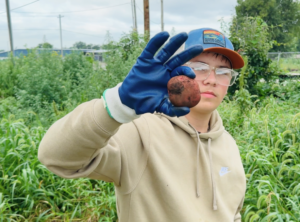
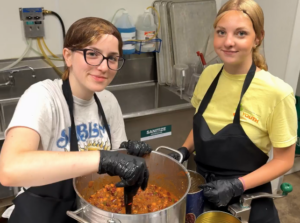
Thursday was another day filled with farm work. We focused on harvesting the final items for the CSA pickup. One crew went to Groundswell to bake the weekly farm stand focaccia bread. After lunch, our workshop focused on our food system and what careers are integral to its function. We wanted to look at ones we would typically think of and also branch out to brainstorm possible agricultural careers in STEM. Each participant then selected a career to research and share about with the rest of the crew.
Only two weeks remain!