March 26, 2026 | Housing
The Story of the Coe-Paul-Westrom House
Saving History, Building Hope
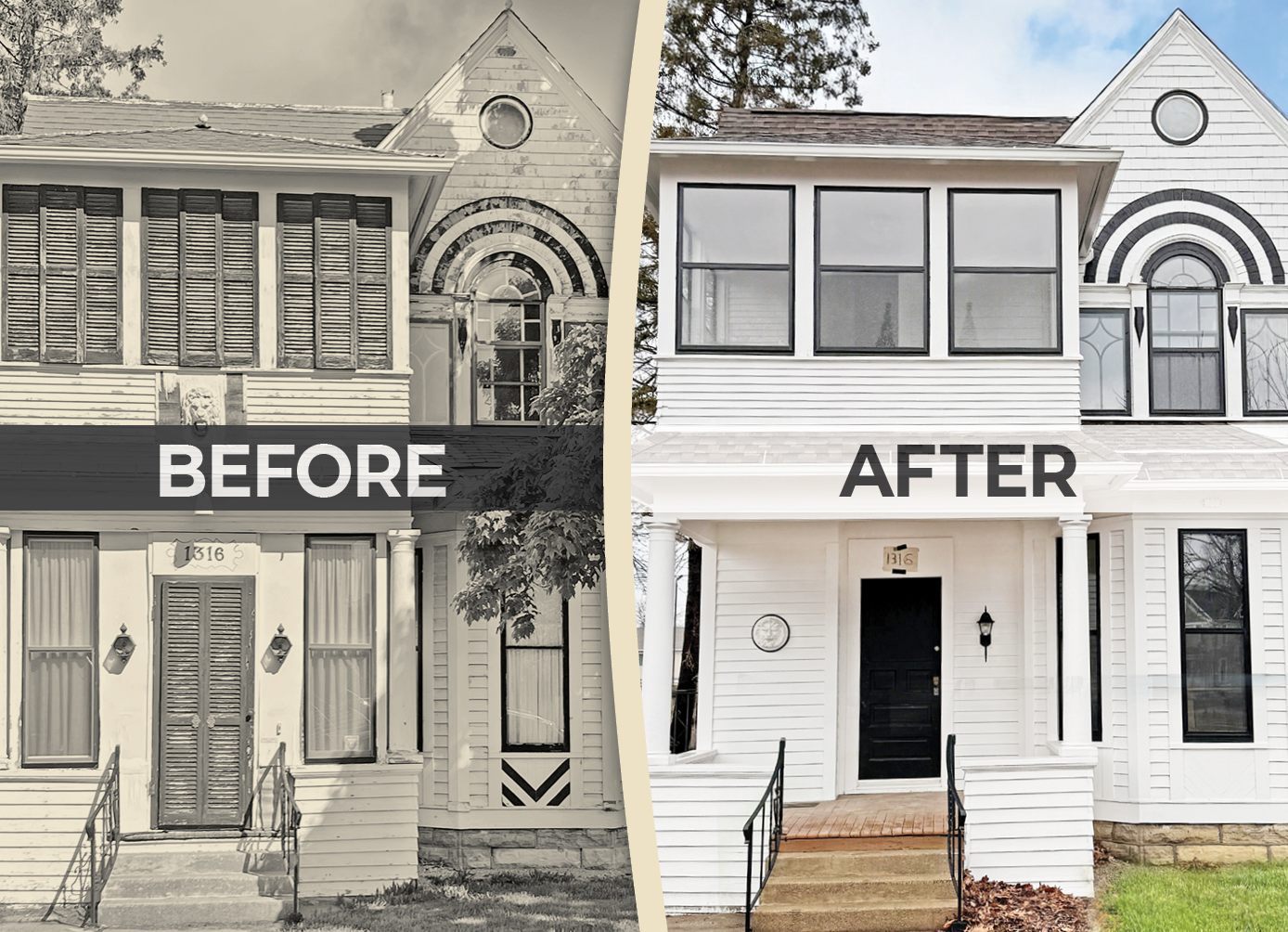
Some houses simply shelter people.
Others quietly witness the story of a city.
The home at 1316 3rd Avenue SE is one of those rare places.
For more than 150 years, this house has stood through the growth of Cedar Rapids. It went from farmland to streetcars, from horse-tied hitching posts to modern city streets. Along the way it has been a farmhouse, a boarding house, a family home, a collector’s museum, and now, once again, a place for families to live.
Its story begins even before it was part of Cedar Rapids.
Coe College Farmland
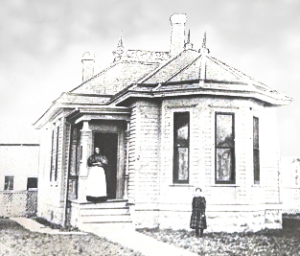 In 1848, the land where the house now sits was part of a federal land patent granted by President James K. Polk. The property was sold to a farmer named Joshua Phillips for one dollar per acre. After Phillips’s death in 1852 and a couple additional ownership changes, Coe College purchased the property in 1854 with the intention of using it for farming.
Sometime in the 1860s, after railroads began bringing materials into the region, a five-room, one-story farmhouse was built here. That early structure is the core of the house that still stands today. When the land was divided into village lots in 1871, the quiet farmstead suddenly found itself in what would soon become one of Cedar Rapids’ developing neighborhoods.
In 1882, Coe College sold the property to James and Sarah Paul.
The Paul Era
At the time the Paul family moved in, the house was still a single-story building, modest compared to the large homes being constructed beside it.
But this block of 3rd Avenue was becoming a desirable place to live. The location was close to downtown Cedar Rapids, near Coe College, and served by a streetcar line that ran along the avenue. By the 1890s, the neighborhood was filled with impressive homes built for Cedar Rapids’ growing upper middle class.
Not far away were the local fairgrounds, where crowds gathered for races, circuses, and traveling shows. Visitors coming to town often needed places to stay, and homes along the streetcar line were perfectly situated.
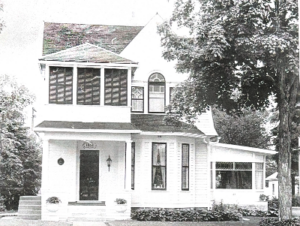 The Pauls hired a local architect to add a second story to their home. Perhaps it was to keep pace with the grander houses around them. Perhaps it was to create rooms to rent to visitors attending the fairgrounds. Perhaps it was simply to make room for their daughter, Mabel Paul. Whatever the reason, the transformation gave the house the recognizable shape it still has today. Unfortunately, Mr. Paul did not live to see the second story completed.
Many oral histories suggest that famed American architect Louis Sullivan, who worked on the designs for two Cedar Rapids churches and one local bank, may have stayed in the upstairs rooms while working in the city around 1913–1914. Research is ongoing to further verify this connection.
In 1919, the house was officially converted into a duplex, with a kitchen added upstairs. Mrs. Paul remained in the home for the rest of her life, renting the upper floor for income. By the 1930s, city directories show her daughter Mabel and son-in-law Fayette Moore living there as well, and the sound of Mabel’s piano lessons often filled the rooms. For decades the home stayed in the family, quietly witnessing the neighborhood grow and change around it.
But the house’s most colorful chapter was still ahead.
The Collector: Raymond Westrom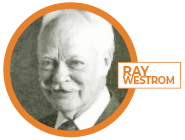
Raymond C. Westrom purchased the house after Mabel Moore’s death in the early 1970s. And with Ray’s arrival, the house became something entirely different.
Ray had once been a Navy chef and later worked as the chef at Cedar Rapids’ famous Roosevelt Hotel. But cooking was only one of his passions. Ray was a collector. An extraordinary one.
Over the years he filled the house with thousands of items: Tiffany lamps, stained glass windows, antique furniture, clocks, China, movie memorabilia, Santa Claus figurines, and historic artifacts from Cedar Rapids.
Visitors could find everything from Grant Wood’s framed butterfly collection to props from the movie “Gone With the Wind.” Every room held treasures. In fact, Ray created detailed lists of the collections throughout the house from the living room to the sunroom to the “Butterfly Room.”
But Ray didn’t keep his collection to himself. He gave tours. Hundreds, perhaps thousands, of people visited the home over the years. Guests recall that tours could last three hours or more, with Ray enthusiastically sharing stories about each piece.
Sometimes he would play ragtime music or send Lawrence Welk bubbles floating through the air while guiding visitors through the house.
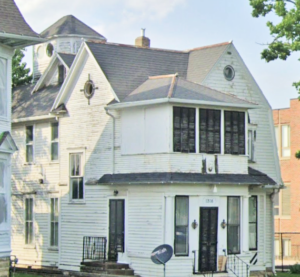 He added his own touches to the property as well, adding an enclosed front porch, a sunroom, a garage, and most dramatically, a cupola tower was placed on the roof!
Coonrod’s crane lifted the tower into place, creating a spectacle in the neighborhood. Ray loved climbing to the top and showing visitors the view. From there you could see downtown Cedar Rapids, Coe College, and even Mount Mercy. He said he wanted it to feel like a lighthouse for the city.
Ray also loved hosting gatherings. Dinner parties were common, with a kitchen and large tables in the basement that could seat 12-15 guests. Ladies’ social groups came for tea. Neighbors stopped by for conversation.
The house transformed into an unofficial museum and gathering place, preserving Cedar Rapids’ past in every room. But like many historic homes, time eventually caught up with it.
By the mid-2000s, Ray’s health began to decline. During this time, much of his beloved collection was dispersed, and the home that had once been filled with treasures and stories grew quiet. Ray passed away in September 2008, remembered by those who knew him for his generosity, his remarkable collections, and of course his famous mustache.
The house was then acquired by St. Paul’s United Methodist Church next door. For many years it stood vacant, quietly waiting for its next chapter.
A New Beginning
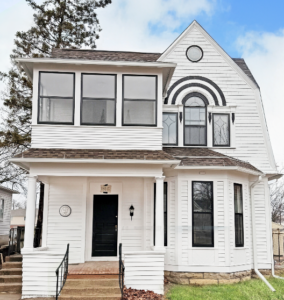 The house found new life when St. Paul’s United Methodist Church gifted the property to Matthew 25, along with $150,000 toward its restoration, launching a partnership that made its revival possible.
In May 2025, work on the exterior began, launching what many historic restoration experts believed would be a long process. Projects like these, especially homes that have sat vacant for nearly twenty years and were once slated for demolition, typically take 18 months to three years to complete once site work begins. Thanks to the dedication of Matthew 25’s housing team, Steve Miller, who serves as general contractor for Corridor Construction Company, and other community partners, restoration moved at an extraordinary pace. In just ten months, the house was brought back to life, ready to begin its next chapter.
Through this careful rehabilitation, the home once again looks remarkably similar to how it would have appeared in the late 1800s and early 1900s, and it has been thoughtfully restored to provide homes for two families. Matthew 25 Executive Director Courtney Ball emphasized the broader impact of the project on housing in Cedar Rapids:
“We have an affordable housing shortage in Cedar Rapids. Along with building new units, it’s also wise to preserve and repair as many existing homes as possible. This project brings back a historic home that sat vacant for years but can now house two families at very affordable prices. We are so happy to be able to bring this property back to life.” – Courtney Ball
Local historian Mark Stoffer Hunter, who has studied the home’s history extensively, says the building represents an important connection to Cedar Rapids’ past. When asked why Cedar Rapidians should care that this house has been restored, he replied,
“They should care because it is connected to the very heart and soul of Cedar Rapids. It is a physical reminder of the earliest history of the city. It has survived since early Civil War times. It is critical to our sense of place, identity, and who we are as a community.” – Mark Stoffer Hunter
This project has not only preserved a meaningful piece of Cedar Rapids history, it’s also helping meet a critical need for affordable housing. Safe, stable housing is foundational for individuals and families, shaping health, education, and economic opportunity. As housing costs continue to rise, efforts to preserve and restore existing homes are essential to keeping neighborhoods accessible and strong. Quality, well-managed housing allows families to remain in place, build relationships, and stay connected to the communities they call home.
From frontier farmland to streetcar suburb, from family home to collector’s wonderland, the Coe–Paul–Westrom House has lived many lives. And now, after more than 150 years, it begins yet another chapter, once again serving the people of Cedar Rapids.
By Charisse Lawrence, Communications and Marketing Leader, Matthew 25.
Special thanks to St. Paul’s United Methodist Church, Mark Stoffer Hunter, Jeff Westrom, and Shelley Sullens for their contributions in helping shape this story.